Many companies trust their teams to keep complex systems running. And often, that trust is well deserved.
Experienced engineers know where to look. They know which logs matter, which services are involved, and how to reconstruct what happened when something goes wrong.
Until the day the system behaves in a way nobody expected.
A staging environment sends thousands of emails to real users.
A wrong planning file reaches production and machines spend an entire weekend producing the wrong product.
A costly penalty is almost triggered, and it takes days of digging through logs to understand that the software actually did exactly what it was told to do.
These are rarely stories about incompetent teams.
They are stories about systems that reveal too little about what is actually happening inside them.
As long as everything works, a black box can feel perfectly manageable. The problems start when something goes wrong and the information needed to understand it is scattered across logs, services, queues, databases and monitoring tools.
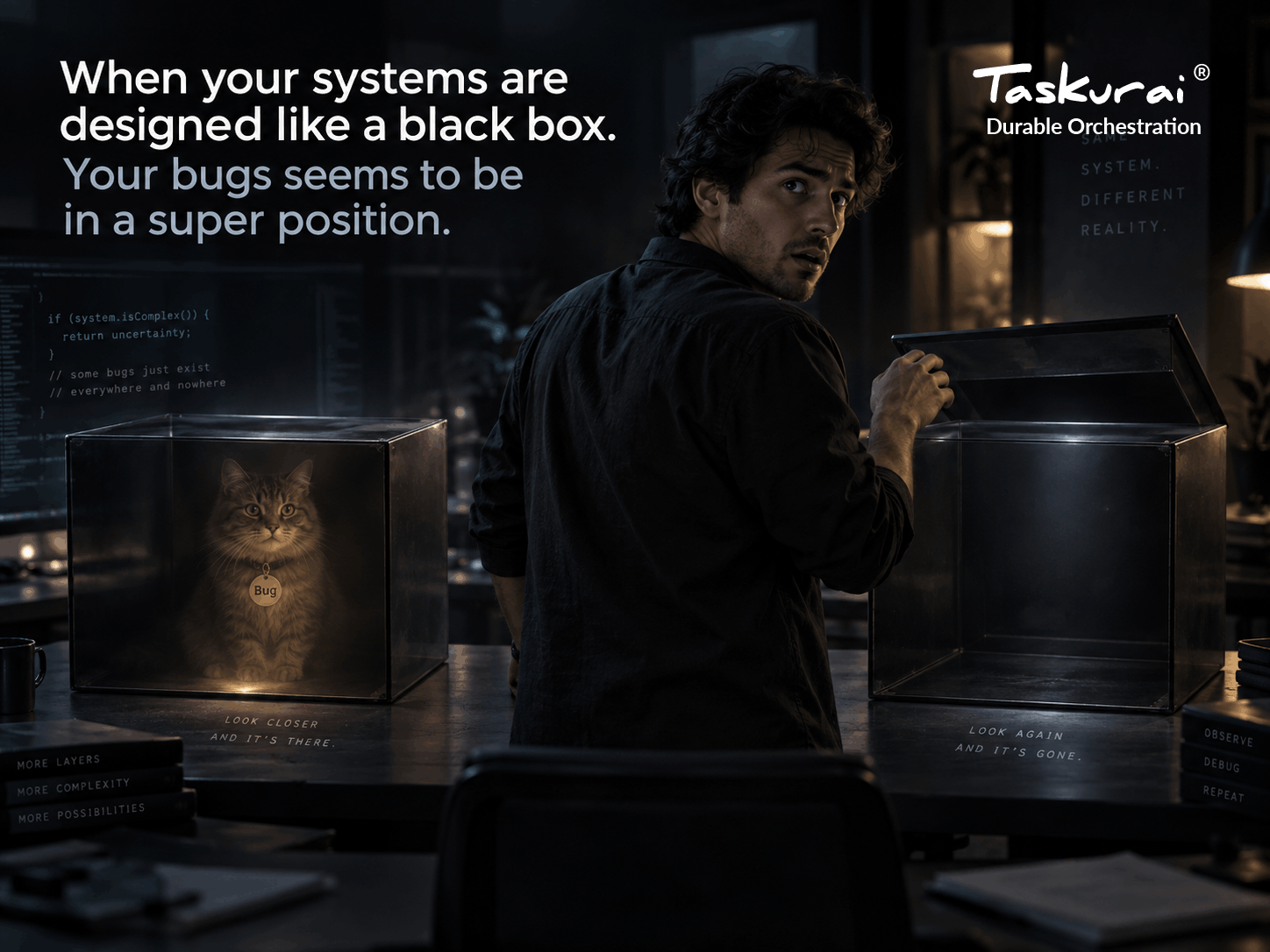
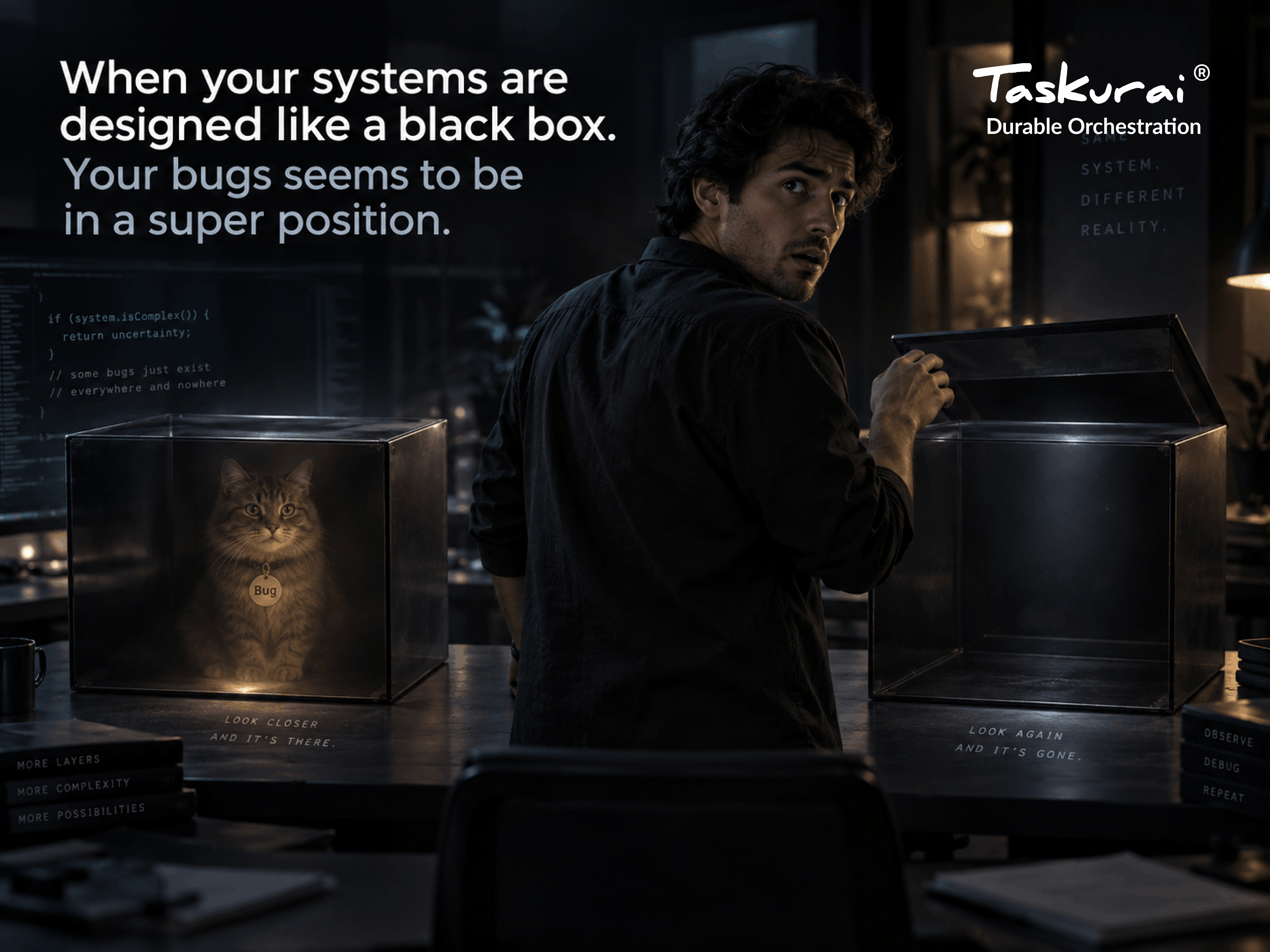
At that point, the truth can start to feel almost quantum mechanical.
Was this input processed?
Which version was used?
What actually ran?
What happened next?
Where did the decision come from?
Until someone reconstructs the full chain of events, several explanations seem possible at the same time.
Luckily, software does not need to be designed like quantum physics.
Execution can be visible by design.
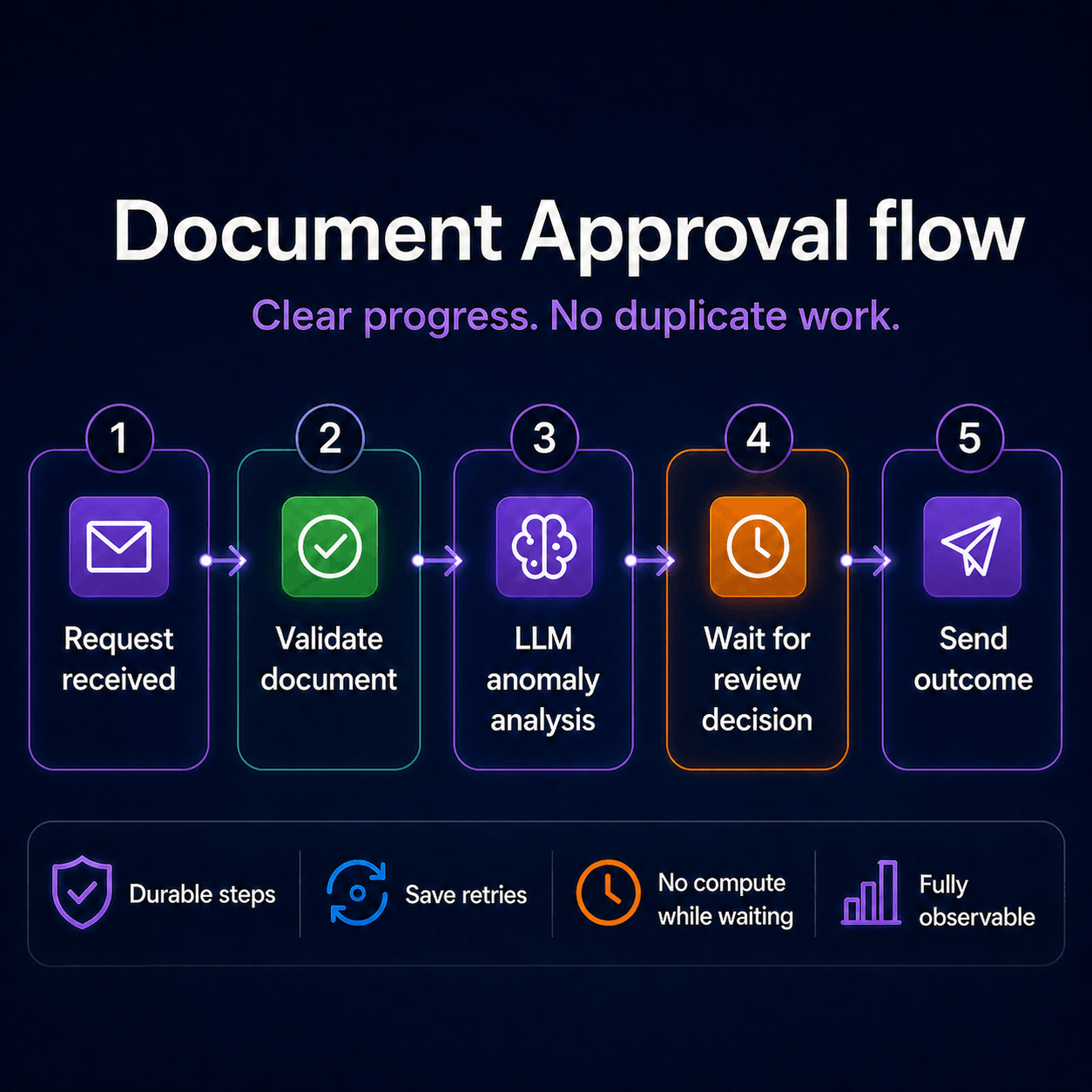
Taskurai keeps execution history and logs connected to the work they belong to, so teams can see what happened without reconstructing the story afterwards from fragmented telemetry.
The cat named “Bug” 🐈 never needs to be in superposition.