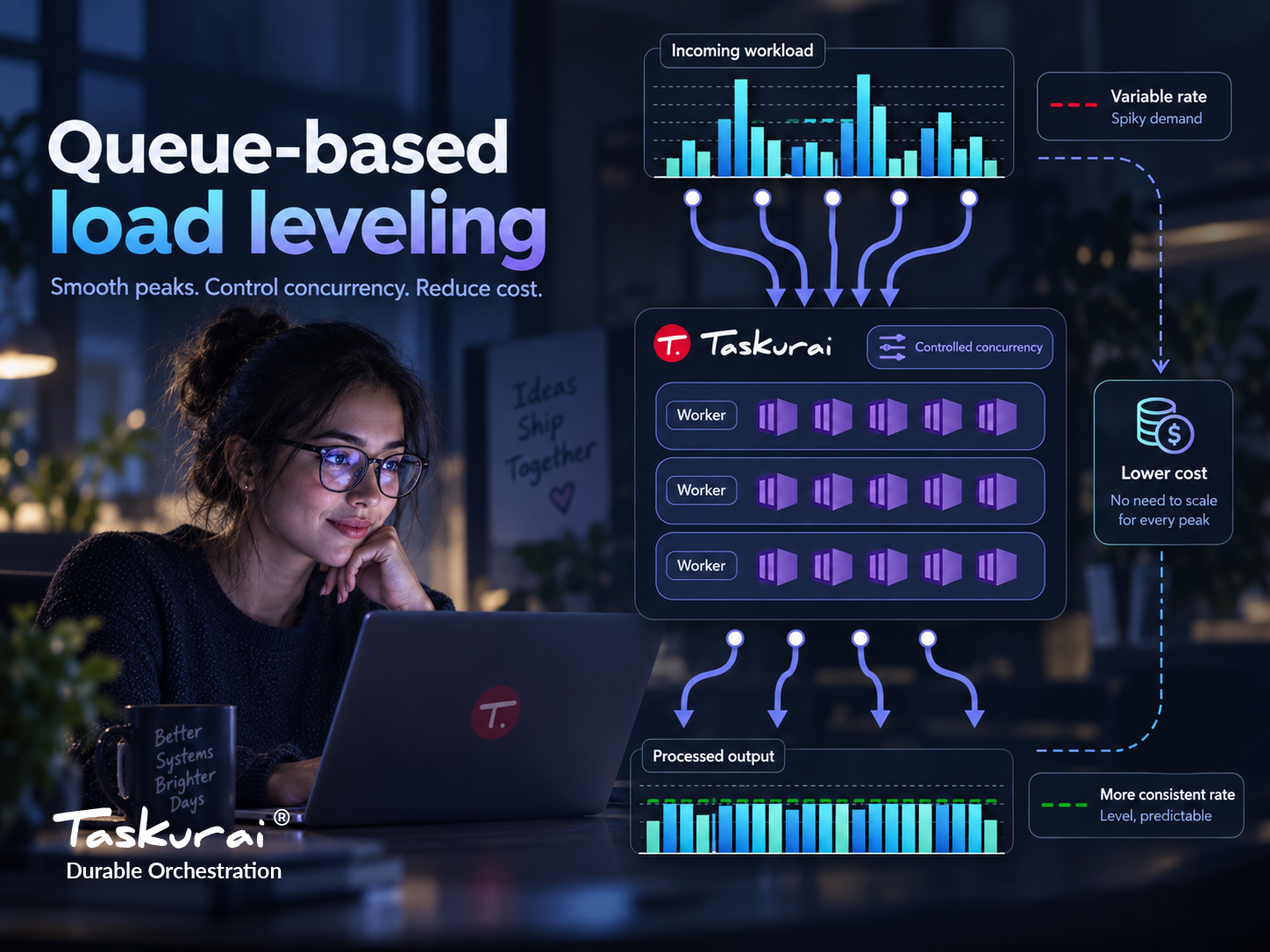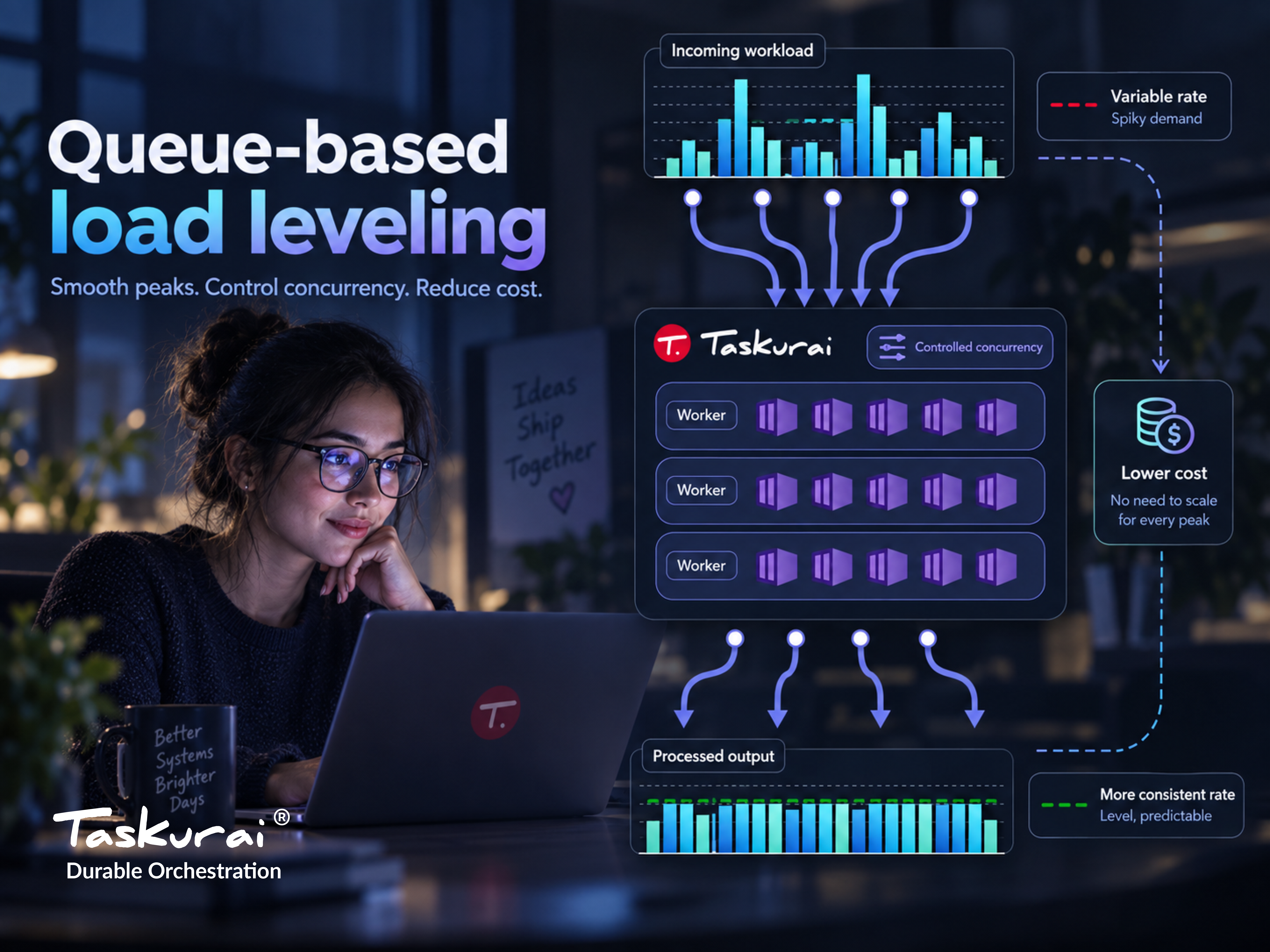
AI workloads can scale fast. Your bill can scale just as fast.
If 10 concurrent agents are normally enough, a sudden spike of 100 requests does not have to trigger 100 concurrent executions.
Instead, you can absorb the peak and process the workload at a controlled rate.
That is queue-based load leveling.
With Taskurai, applications create tasks and workers pull them according to the capacity you make available. Incoming demand can spike while the processing rate remains bounded.
The useful part is that you get the execution lifecycle with it.
No separate input and output queues to manage. No custom retry or dead-letter handling. No separate status storage to track what is waiting, running, completed, or failed.
That lifecycle is already attached to the Taskurai task.
A caller can even wait for the result using CreateTaskAndWaitForResult. The task remains durable and asynchronous underneath, while polling allows the caller to wait for completion — provided the caller and everything in between can tolerate the longer wait.
The practical question becomes simple:
How much concurrent capacity do you actually want to pay for?